UX Design & Research
Netflix User Research
This research explored how users discovered and chose content on Netflix to identify key pain points and opportunities for improving trust, personalization, and social viewing experiences.
Year :
2025
Industry :
Entertainment
Client :
Netflix - Academic Research
Project Duration :
4 weeks
Problem Statement :
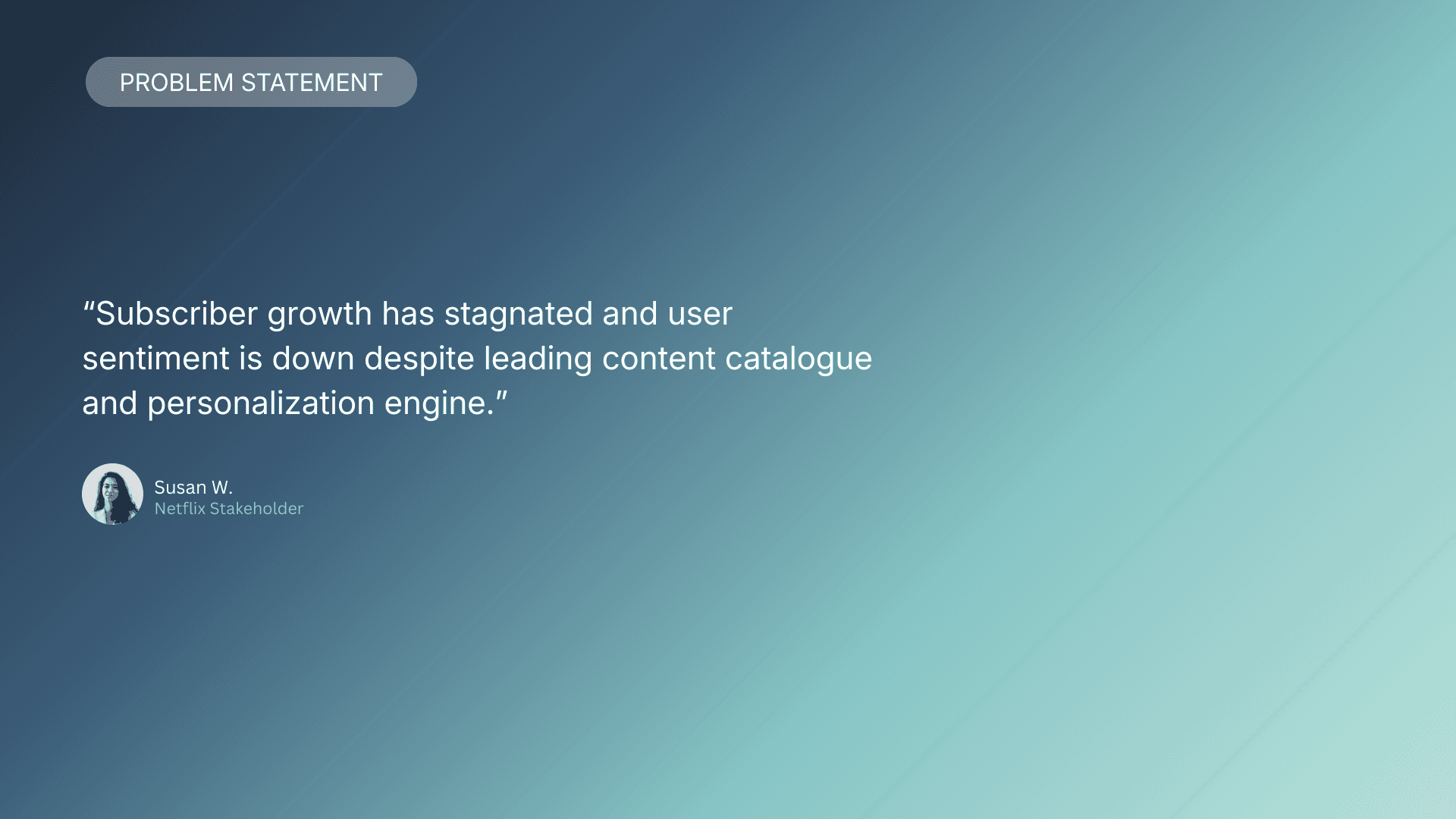
Socially motivated viewers struggle to maintain shared watching experiences because Netflix does not offer native synchronous viewing tools. As a result, users rely on third party browser extensions that often break, feel unreliable, and disrupt the social connection they want to maintain while watching content together.
Users have lost confidence in Netflix’s recommendation system because it does not reliably surface content that matches their preferences. This makes content discovery feel overwhelming and time consuming, which impacts how often people return to the platform.
Research Methodology :
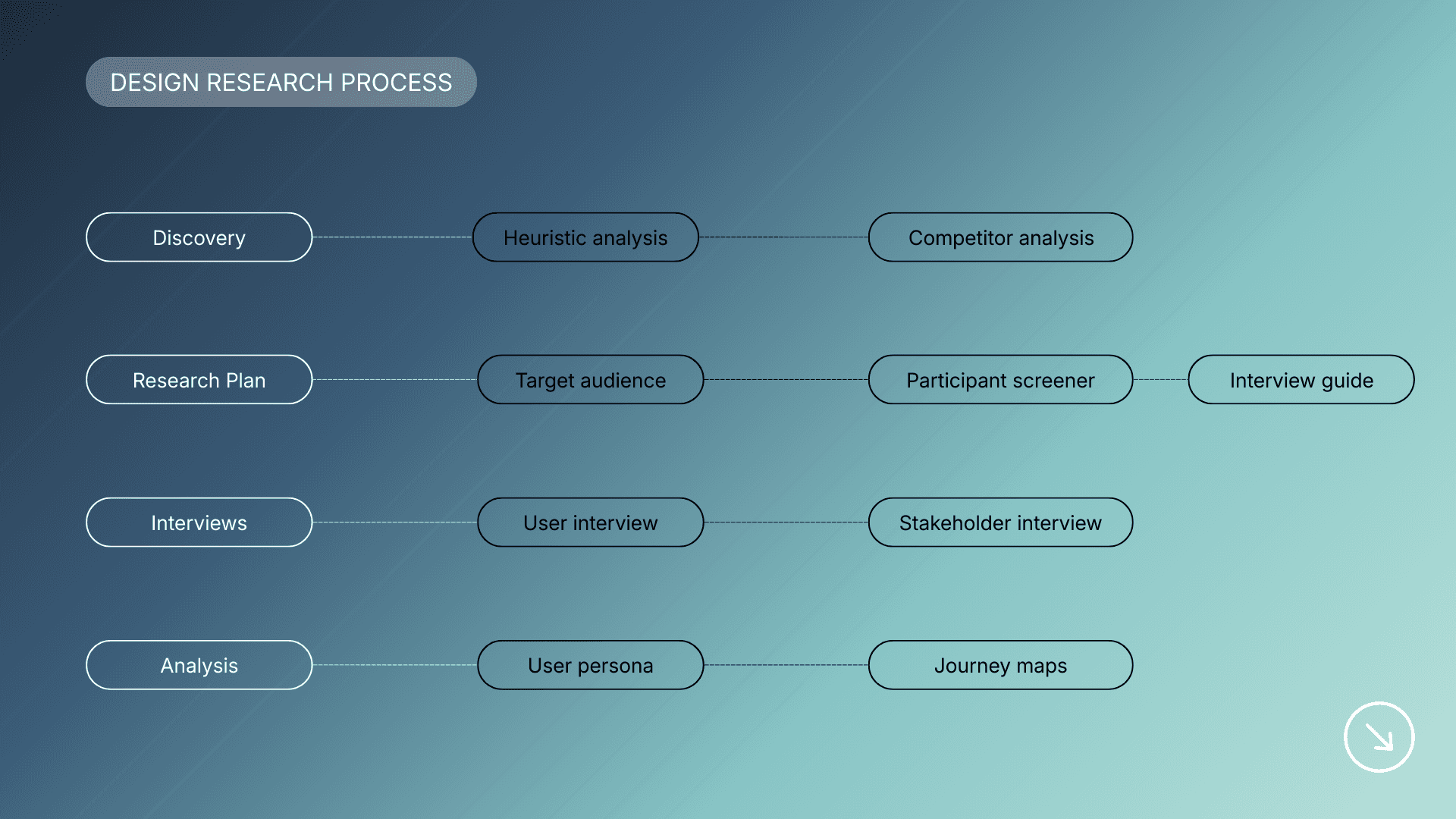
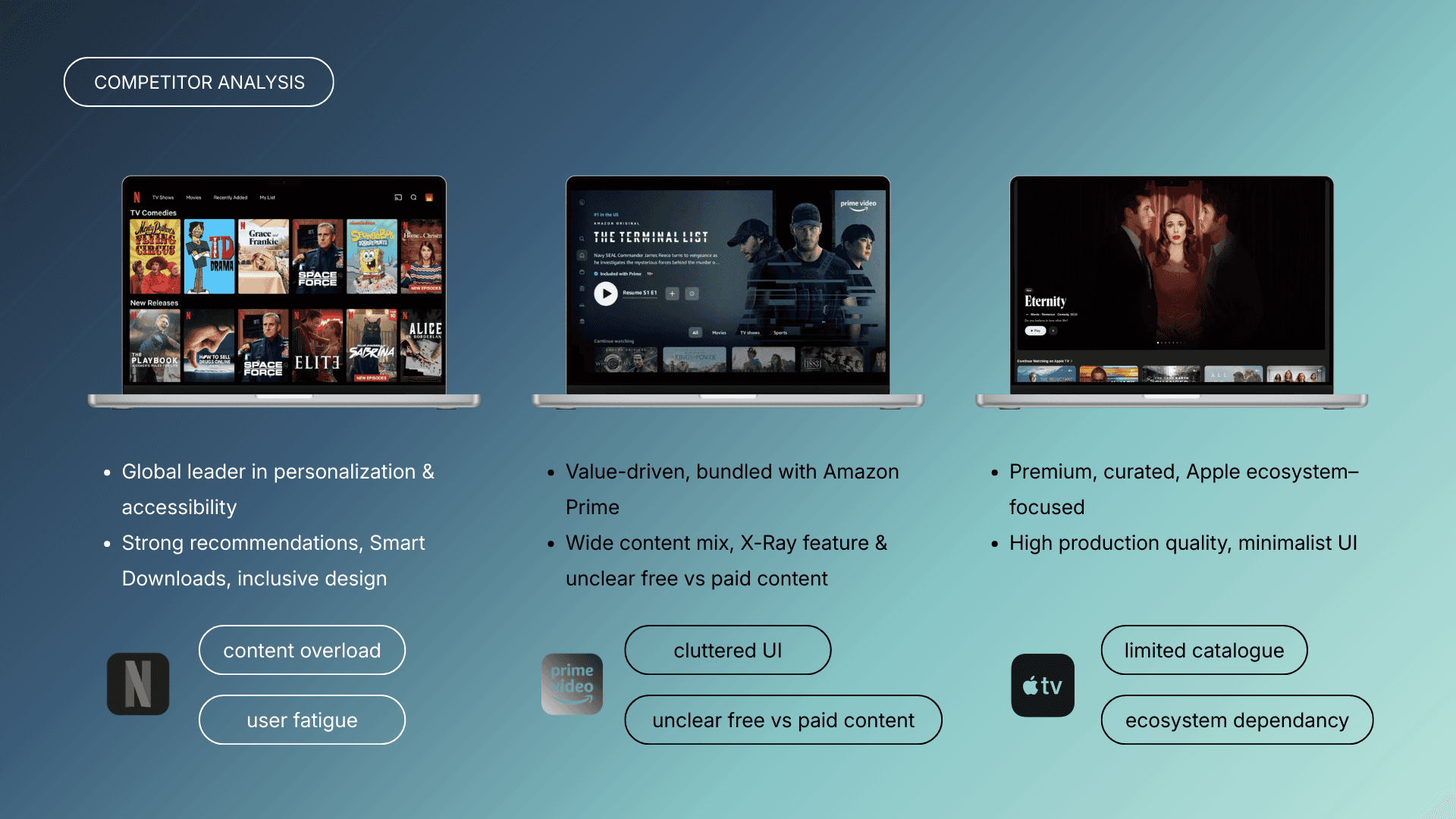
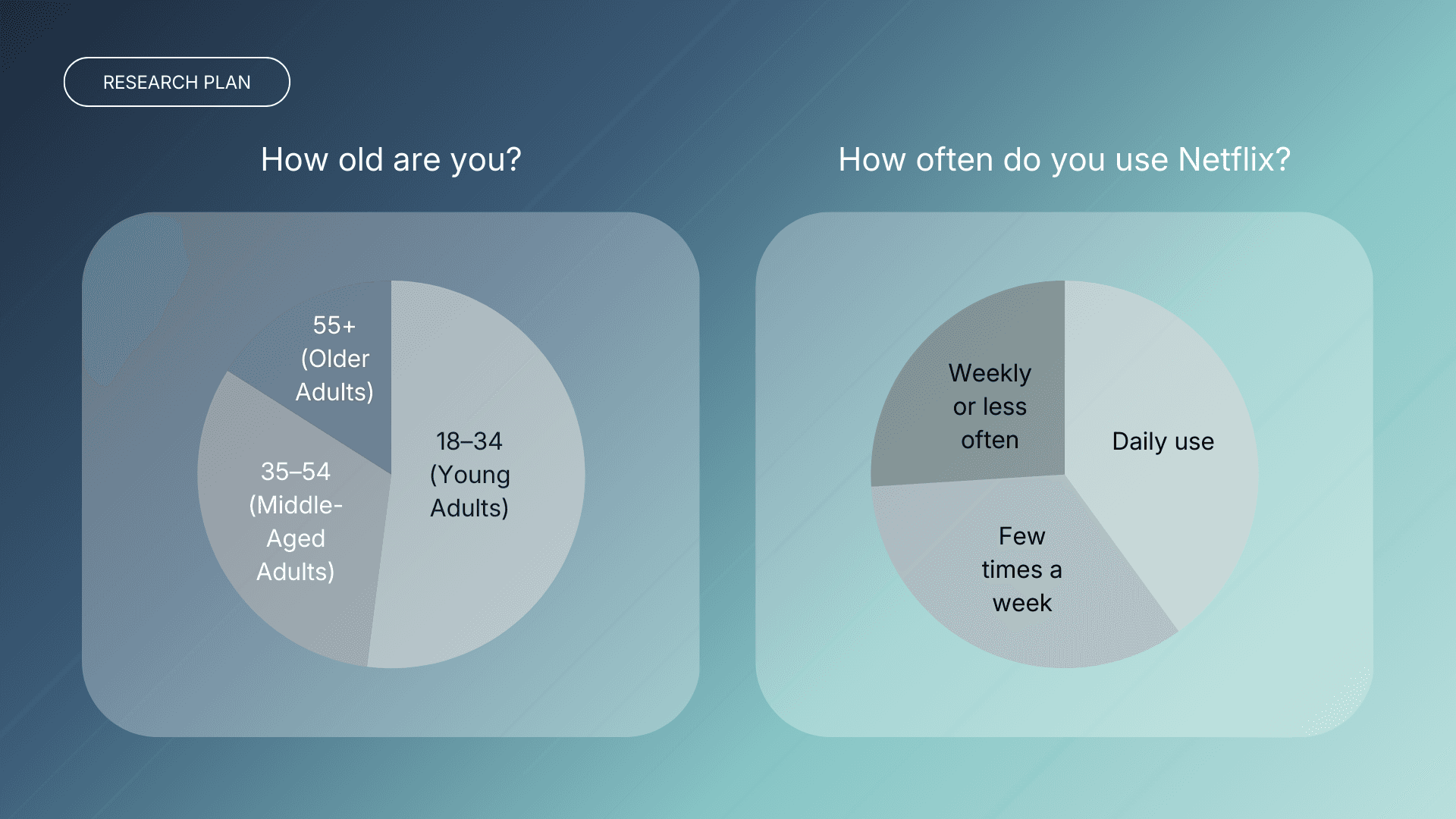
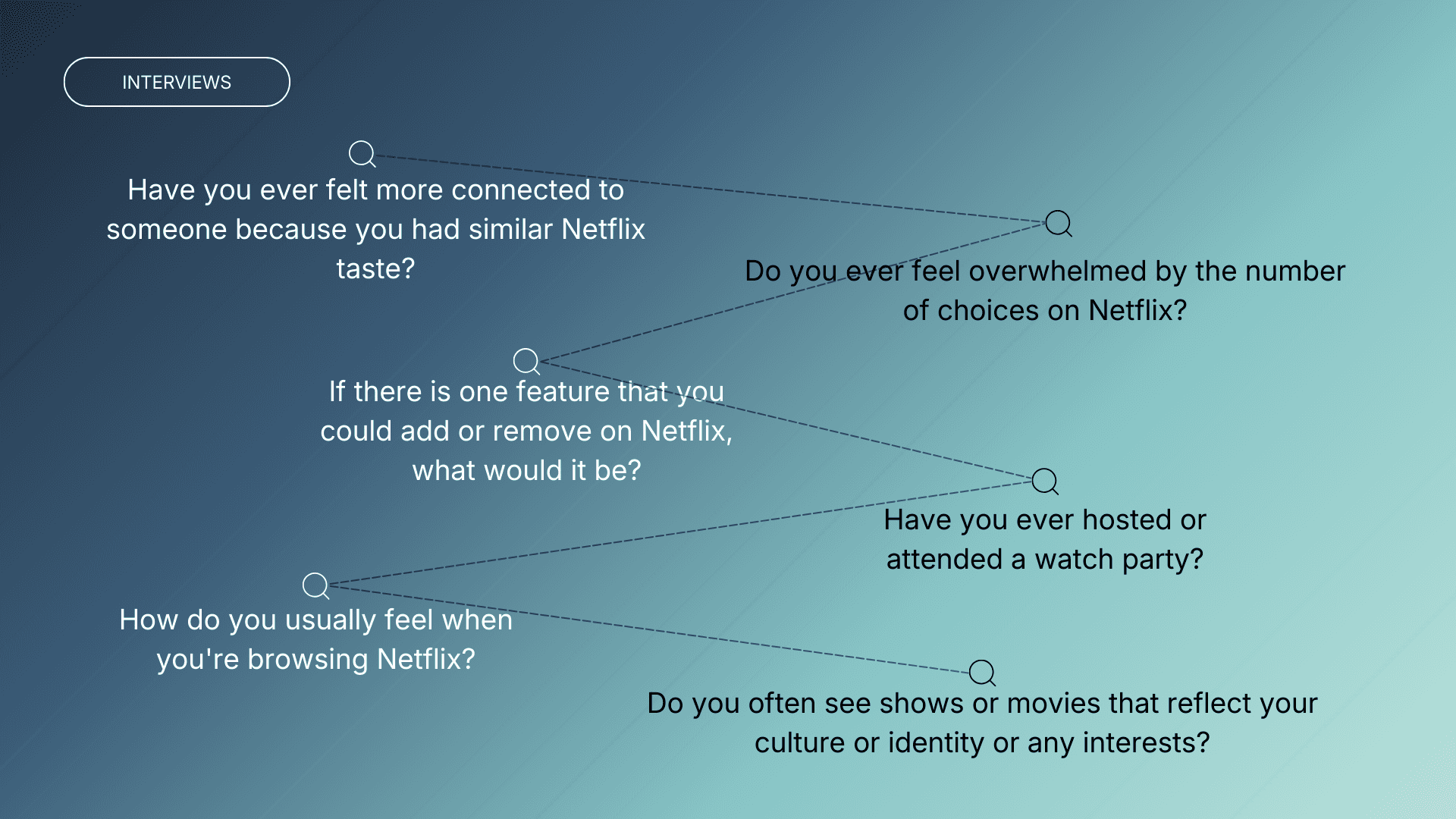
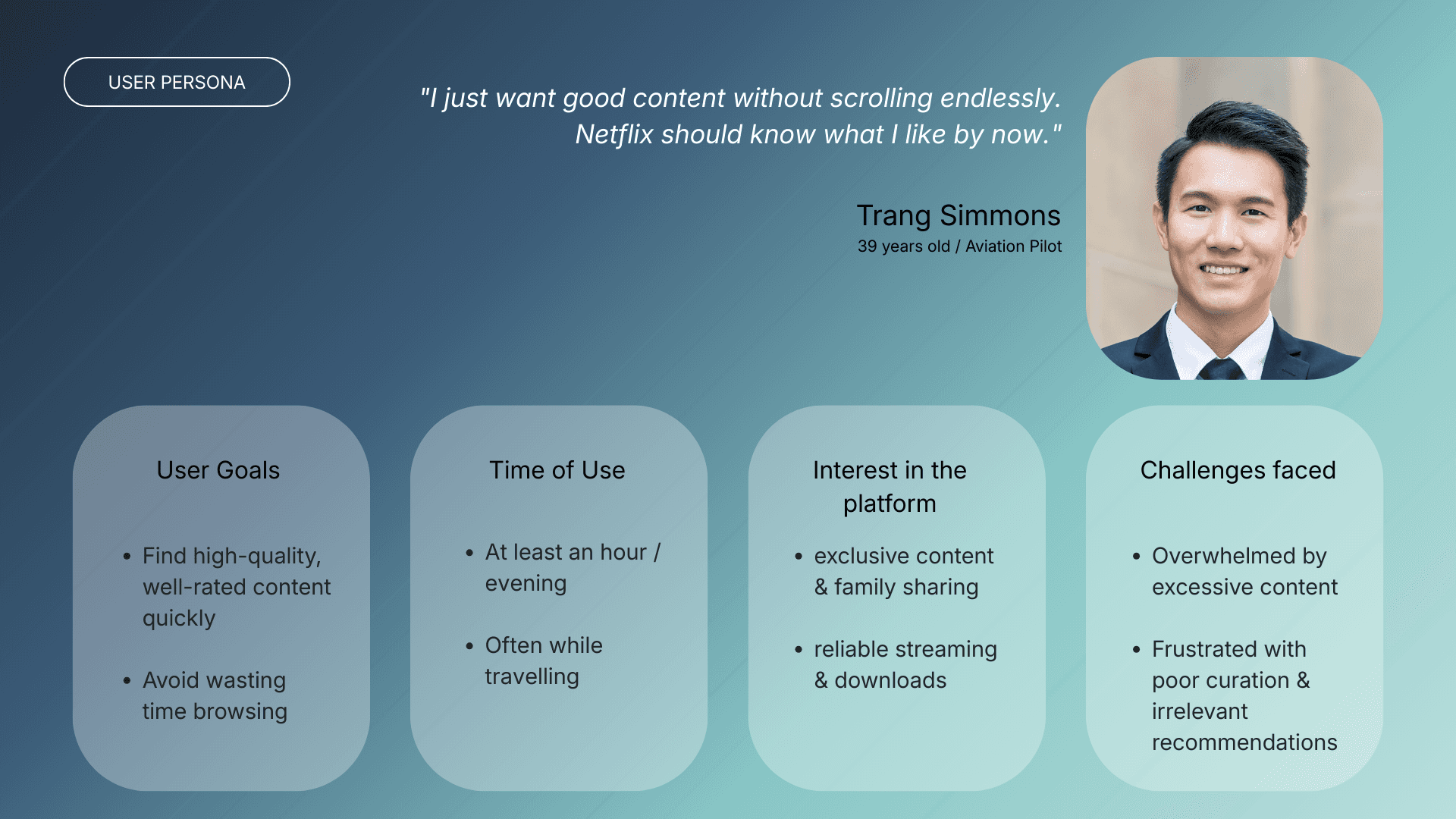
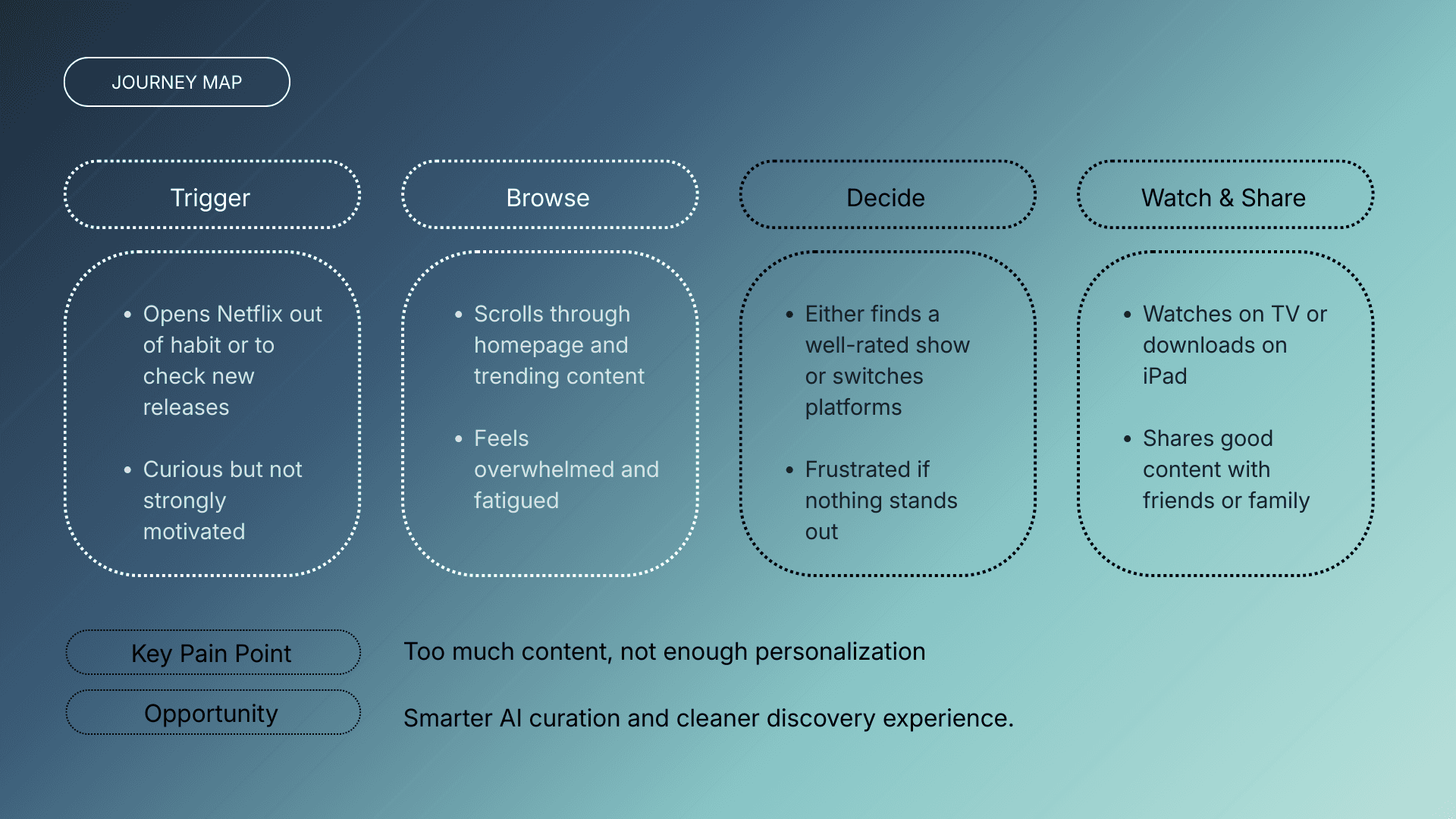
The objective of this user research was to understand how users discovered, chose, and engaged with content on Netflix, and to identify key pain points that affected trust, decision-making, and the overall viewing experience. The research focused on users’ content discovery behaviors, reliance on external recommendation sources, social watching habits, and experiences of choice overload across devices. Using qualitative methods such as in-depth user interviews, journey mapping, and pattern analysis, the study aimed to uncover emotional and functional friction points throughout the end-to-end viewing journey from initial trigger to post-watch reflection. Insights from this research informed opportunities to improve personalization, streamline content discovery, integrate social features, and strengthen user trust within the Netflix platform.
Research Findings & Recommendations :
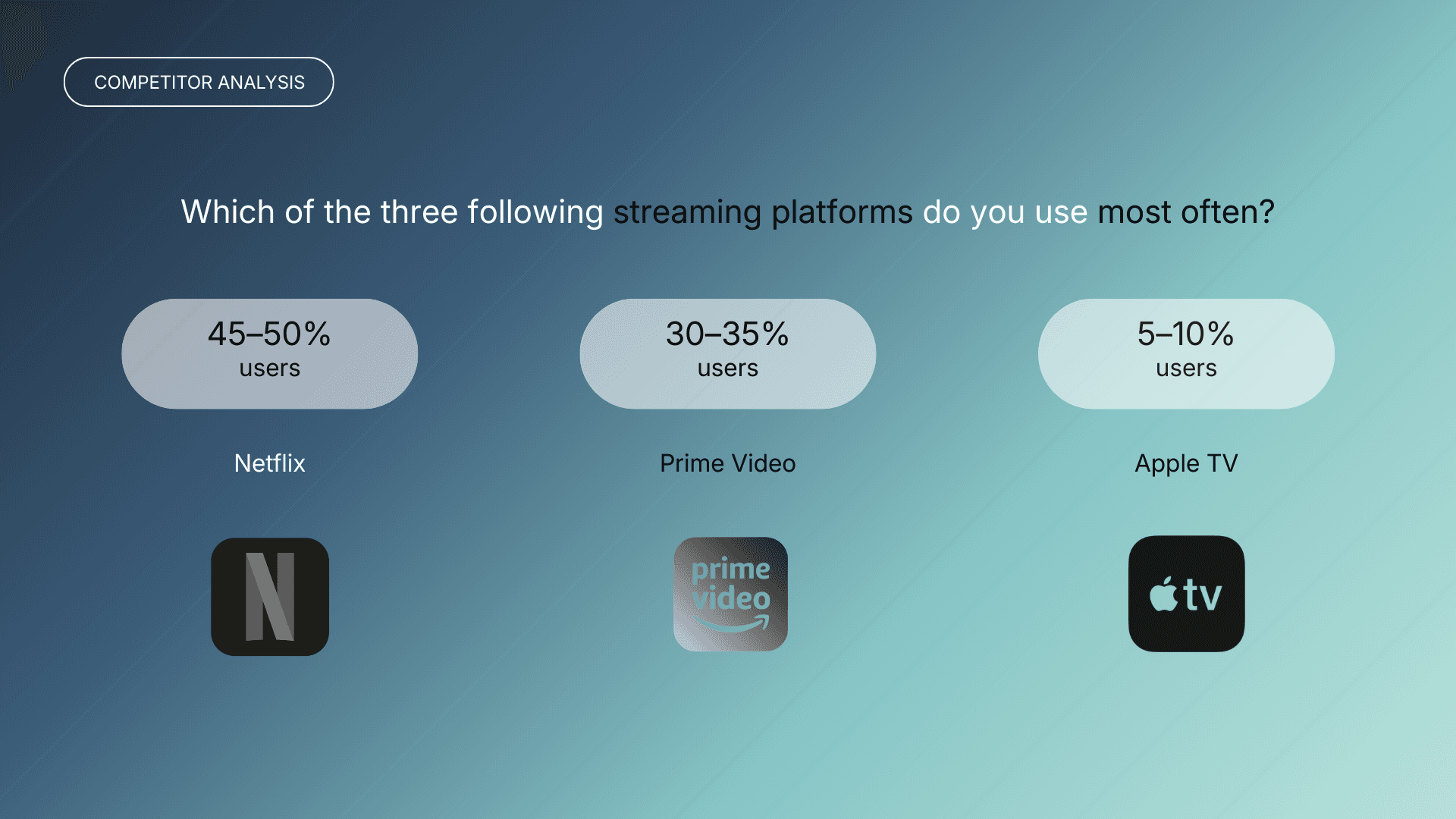
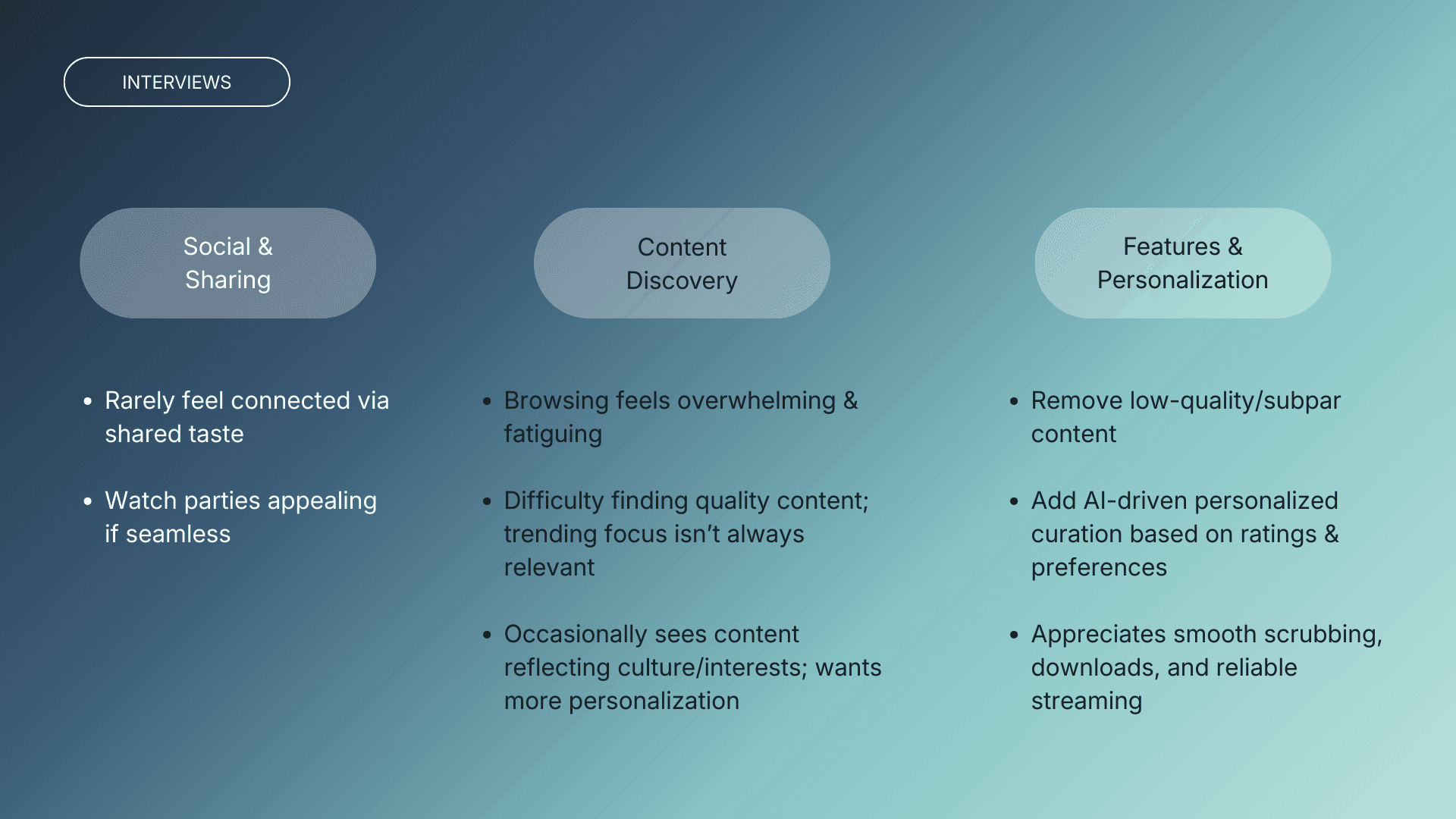
The research findings indicate a notable lack of trust and satisfaction with Netflix’s current content discovery experience. A significant majority of participants (80%) reported that they do not trust Netflix’s recommendation algorithm, instead relying on external sources such as friends, social media, or reviews for content suggestions (66%). Social interaction emerged as an important factor, with 74% of participants stating that they already engage in social watching and would be willing to use a dedicated social watching feature if introduced. Additionally, over half of the participants (51%) expressed feeling overwhelmed by the sheer volume of available choices, highlighting choice overload as a key pain point in the platform’s user experience.
These opportunities focus on enhancing trust, discovery, and social engagement within the existing Netflix ecosystem.
Integrate a watch party feature in the existing Netflix platform - Integrating a native watch party feature would support social watching behaviors already common among users, enabling shared viewing experiences without relying on external tools.
Introduce an Inbuilt content sharing feature for current user - An inbuilt content-sharing feature would allow users to easily recommend shows or movies to friends directly within the platform, reinforcing social discovery and reducing friction.
Introduce inbuilt rotten tomatoes and IMDB ratings into current Netflix so users do not go to third party apps - Embedding trusted third-party ratings such as Rotten Tomatoes and IMDb would address low confidence in Netflix’s recommendation algorithm, giving users clearer signals to make faster, more informed decisions without leaving the app.
Improve the content recommendation algorithm & give users direct control over genre - Improvements to the recommendation system combined with giving users direct control over genre preferences and filters would help reduce decision fatigue and content overload by aligning suggestions more closely with individual tastes.
Provide free trials for prospect users - Offering free trials for prospective users would lower the barrier to entry, allowing new users to explore the platform’s value, features, and personalization before committing, ultimately supporting user acquisition and retention.
More Projects
UX Design & Research
Netflix User Research
This research explored how users discovered and chose content on Netflix to identify key pain points and opportunities for improving trust, personalization, and social viewing experiences.
Year :
2025
Industry :
Entertainment
Client :
Netflix - Academic Research
Project Duration :
4 weeks
Problem Statement :
Socially motivated viewers struggle to maintain shared watching experiences because Netflix does not offer native synchronous viewing tools. As a result, users rely on third party browser extensions that often break, feel unreliable, and disrupt the social connection they want to maintain while watching content together.
Users have lost confidence in Netflix’s recommendation system because it does not reliably surface content that matches their preferences. This makes content discovery feel overwhelming and time consuming, which impacts how often people return to the platform.
Research Methodology :
The objective of this user research was to understand how users discovered, chose, and engaged with content on Netflix, and to identify key pain points that affected trust, decision-making, and the overall viewing experience. The research focused on users’ content discovery behaviors, reliance on external recommendation sources, social watching habits, and experiences of choice overload across devices. Using qualitative methods such as in-depth user interviews, journey mapping, and pattern analysis, the study aimed to uncover emotional and functional friction points throughout the end-to-end viewing journey from initial trigger to post-watch reflection. Insights from this research informed opportunities to improve personalization, streamline content discovery, integrate social features, and strengthen user trust within the Netflix platform.
Research Findings & Recommendations :
The research findings indicate a notable lack of trust and satisfaction with Netflix’s current content discovery experience. A significant majority of participants (80%) reported that they do not trust Netflix’s recommendation algorithm, instead relying on external sources such as friends, social media, or reviews for content suggestions (66%). Social interaction emerged as an important factor, with 74% of participants stating that they already engage in social watching and would be willing to use a dedicated social watching feature if introduced. Additionally, over half of the participants (51%) expressed feeling overwhelmed by the sheer volume of available choices, highlighting choice overload as a key pain point in the platform’s user experience.
These opportunities focus on enhancing trust, discovery, and social engagement within the existing Netflix ecosystem.
Integrate a watch party feature in the existing Netflix platform - Integrating a native watch party feature would support social watching behaviors already common among users, enabling shared viewing experiences without relying on external tools.
Introduce an Inbuilt content sharing feature for current user - An inbuilt content-sharing feature would allow users to easily recommend shows or movies to friends directly within the platform, reinforcing social discovery and reducing friction.
Introduce inbuilt rotten tomatoes and IMDB ratings into current Netflix so users do not go to third party apps - Embedding trusted third-party ratings such as Rotten Tomatoes and IMDb would address low confidence in Netflix’s recommendation algorithm, giving users clearer signals to make faster, more informed decisions without leaving the app.
Improve the content recommendation algorithm & give users direct control over genre - Improvements to the recommendation system combined with giving users direct control over genre preferences and filters would help reduce decision fatigue and content overload by aligning suggestions more closely with individual tastes.
Provide free trials for prospect users - Offering free trials for prospective users would lower the barrier to entry, allowing new users to explore the platform’s value, features, and personalization before committing, ultimately supporting user acquisition and retention.
More Projects
UX Design & Research
Netflix User Research
This research explored how users discovered and chose content on Netflix to identify key pain points and opportunities for improving trust, personalization, and social viewing experiences.
Year :
2025
Industry :
Entertainment
Client :
Netflix - Academic Research
Project Duration :
4 weeks
Problem Statement :
Socially motivated viewers struggle to maintain shared watching experiences because Netflix does not offer native synchronous viewing tools. As a result, users rely on third party browser extensions that often break, feel unreliable, and disrupt the social connection they want to maintain while watching content together.
Users have lost confidence in Netflix’s recommendation system because it does not reliably surface content that matches their preferences. This makes content discovery feel overwhelming and time consuming, which impacts how often people return to the platform.
Research Methodology :
The objective of this user research was to understand how users discovered, chose, and engaged with content on Netflix, and to identify key pain points that affected trust, decision-making, and the overall viewing experience. The research focused on users’ content discovery behaviors, reliance on external recommendation sources, social watching habits, and experiences of choice overload across devices. Using qualitative methods such as in-depth user interviews, journey mapping, and pattern analysis, the study aimed to uncover emotional and functional friction points throughout the end-to-end viewing journey from initial trigger to post-watch reflection. Insights from this research informed opportunities to improve personalization, streamline content discovery, integrate social features, and strengthen user trust within the Netflix platform.
Research Findings & Recommendations :
The research findings indicate a notable lack of trust and satisfaction with Netflix’s current content discovery experience. A significant majority of participants (80%) reported that they do not trust Netflix’s recommendation algorithm, instead relying on external sources such as friends, social media, or reviews for content suggestions (66%). Social interaction emerged as an important factor, with 74% of participants stating that they already engage in social watching and would be willing to use a dedicated social watching feature if introduced. Additionally, over half of the participants (51%) expressed feeling overwhelmed by the sheer volume of available choices, highlighting choice overload as a key pain point in the platform’s user experience.
These opportunities focus on enhancing trust, discovery, and social engagement within the existing Netflix ecosystem.
Integrate a watch party feature in the existing Netflix platform - Integrating a native watch party feature would support social watching behaviors already common among users, enabling shared viewing experiences without relying on external tools.
Introduce an Inbuilt content sharing feature for current user - An inbuilt content-sharing feature would allow users to easily recommend shows or movies to friends directly within the platform, reinforcing social discovery and reducing friction.
Introduce inbuilt rotten tomatoes and IMDB ratings into current Netflix so users do not go to third party apps - Embedding trusted third-party ratings such as Rotten Tomatoes and IMDb would address low confidence in Netflix’s recommendation algorithm, giving users clearer signals to make faster, more informed decisions without leaving the app.
Improve the content recommendation algorithm & give users direct control over genre - Improvements to the recommendation system combined with giving users direct control over genre preferences and filters would help reduce decision fatigue and content overload by aligning suggestions more closely with individual tastes.
Provide free trials for prospect users - Offering free trials for prospective users would lower the barrier to entry, allowing new users to explore the platform’s value, features, and personalization before committing, ultimately supporting user acquisition and retention.